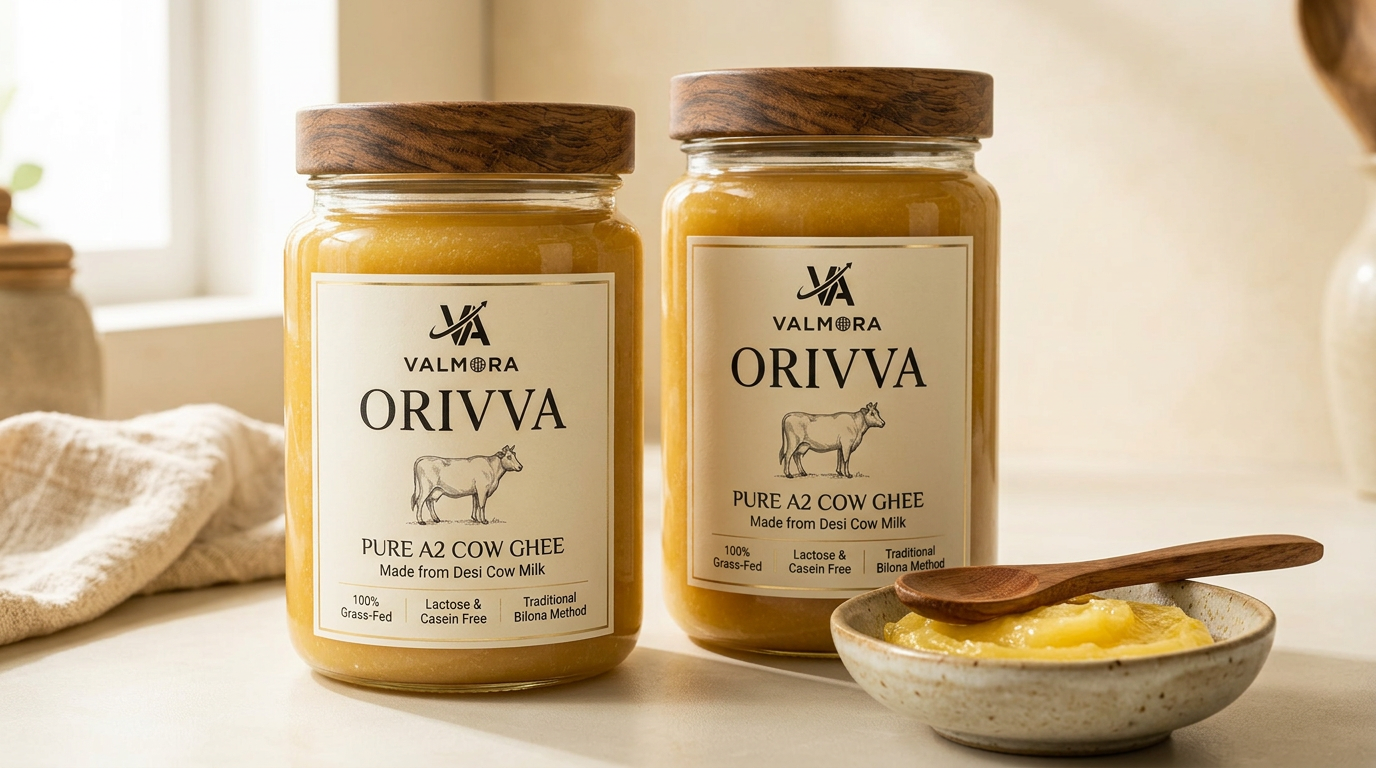
A2 Ghee vs Regular Ghee: What's the Real Difference for Aussies?
If you've walked down the dairy aisle at an Indian grocer in Parramatta or scrolled through ghee listings online, you've probably noticed the price gap. A jar of "regular" ghee sits at around $15. The bottle next to it labelled "A2 ghee" is $35 or more. Same product on the outside, double the price.
So the question is fair: is A2 ghee worth it, or is it just clever marketing? Here's the honest answer, based on what the science actually says and what Australian buyers should know before they pay extra.
What "A2" actually means
A2 refers to a specific type of beta-casein protein in cow's milk. Most modern dairy cows produce milk containing both A1 and A2 protein variants. A2-only milk comes from older, native breeds, including Indian breeds like Gir, Sahiwal, and Tharparkar, along with some Jerseys and Guernseys.
When milk contains A1 protein and is digested, it releases a peptide called BCM-7 (beta-casomorphin-7). Some people, particularly those who feel uncomfortable after dairy without being diagnosed lactose intolerant, suspect A1 is the culprit. The research is mixed. A 2016 study in the Nutrition Journal found participants drinking A2-only milk reported fewer digestive symptoms. Other studies have found no clinically significant difference.
So A2 isn't a marketing myth, but it isn't a miracle either.
Where ghee fits in
Here's where it gets interesting. Ghee is clarified butter. The clarification process removes nearly all the milk solids, which is where casein protein lives. So by the time pure desi ghee is made properly, most of that A1 or A2 protein is gone anyway.
What remains is the fat, the fat-soluble vitamins (A, D, E, K), and the short-chain fatty acids like butyric acid. This is why people who are lactose intolerant often tolerate ghee perfectly fine, even when made from regular cow's milk. Food Standards Australia New Zealand (FSANZ) confirms ghee contains negligible lactose.
So is A2 ghee actually better?
It depends on what you're paying for.
You're paying for the source, not the chemistry. A2 ghee almost always comes from indigenous Indian cow breeds (Gir, Sahiwal) raised on traditional diets. These cows are typically grass-fed, hand-milked, and produce less milk per day than commercial Holstein herds.
You're often paying for the bilona method. Most premium A2 ghee in Australia is made the traditional way: milk is cultured into curd, the curd is churned by hand to extract butter, and the butter is slowly simmered into ghee. This process takes time and yields less ghee per kilo of milk.
You're paying for traceability. Real A2 ghee brands can tell you which farm the milk came from. Regular commercial ghee usually can't.
What about taste?
Genuine A2 bilona ghee tastes different. Most Australians who try it side-by-side describe it as richer, more buttery, with a longer finish. Regular ghee tends to taste cleaner, sometimes flatter, and a bit more neutral.
If you're using ghee for high-heat cooking, frying parathas, or finishing dal, the difference is noticeable. If you're stirring a teaspoon into morning coffee, you may not pick it up.
When regular ghee makes more sense
Regular ghee from a reputable Australian or Indian brand is genuinely good. It performs the same in cooking, has the same high smoke point (around 250°C), and offers the same desi cow ghee benefits when it comes to lactose-free fat, fat-soluble vitamins, and butyric acid content.
Pick regular ghee if you cook with ghee daily and want value, you use it mostly for high-heat frying where subtle flavour gets lost, or you're new to ghee and just want to try it.
When A2 is worth the extra money
Pick A2 ghee if you're using it as a finishing fat (on dal, khichdi, hot toast), you have mild dairy sensitivity and want to be extra careful, you care about supporting traditional small-batch dairy farming, or the flavour matters to you in everyday cooking.
What to actually check on the label
1. "Made from cow's milk" rather than vegetable oil blends 2. Country of origin clearly stated 3. No added preservatives or colour 4. Glass jar preferred over plastic 5. For A2 specifically, the breed name (Gir, Sahiwal) on the label or producer's website
The bottom line
A2 ghee isn't snake oil, and it isn't a magic health food either. It's a premium product made from a specific kind of cow, usually using a slower traditional method, and it costs more for those real reasons.
If you can taste the difference and the price fits your budget, go A2. If you just want good quality ghee for everyday cooking, a trusted regular cow ghee will do the job beautifully.
FAQs
Is A2 ghee really lactose-free? All properly made ghee, A2 or otherwise, is virtually lactose-free because the clarification process removes milk solids.
Can you make A2 ghee from Australian cows? Yes. Some Jersey and Guernsey herds in Australia carry the A2 gene.
Does A2 ghee have more nutrients? The fatty acid profile and vitamin content are very similar to regular ghee. The main differences are in protein source, flavour, and production method.
How can I be sure I'm buying real A2 ghee? Look for breed traceability, third-party testing, and a transparent brand.