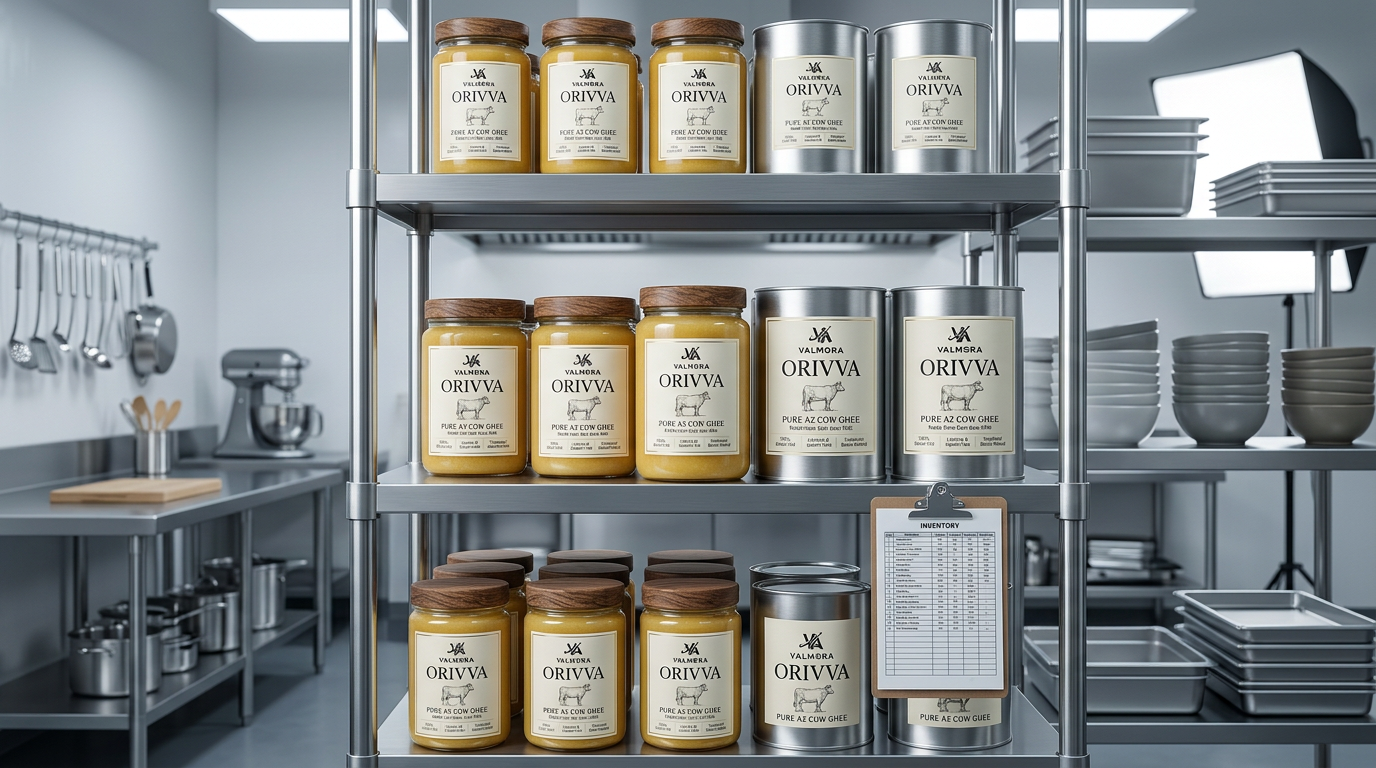
Bulk Ghee in Australia: A Sourcing Guide for Restaurants & Buyers
Running an Indian, Sri Lankan, Pakistani, Middle Eastern, or fusion restaurant in Australia means going through a lot of ghee. A busy kitchen in Parramatta or Dandenong can burn through 20 to 30 kg a week. At retail prices, that's bleeding money.
But bulk ghee is its own game. The wrong supplier means inconsistent quality, irregular supply, or worse, food safety problems. The right supplier becomes part of your kitchen's foundation.
This guide is for chefs, owners, procurement managers, and anyone sourcing bulk ghee Australia for commercial use. Pack sizes, pricing, what to test for, and how to evaluate a supplier.
Who buys bulk ghee in Australia
Most bulk ghee in this market goes to:
• Indian, Pakistani, Bangladeshi, Sri Lankan, and Nepali restaurants• Middle Eastern, Persian, and Afghan eateries• Sweet shops (mithai) and Indian dessert manufacturers• South Indian breakfast restaurants (dosa, idli, vada)• Catering companies serving Indian weddings and events• Spice shops and Indian grocery stores reselling smaller portions• Temples and community kitchens• Specialist bakeries and pastry chefs
Each has different priorities. A mithai shop needs the cleanest flavour and consistent colour. A dosa restaurant needs high-heat performance. A wedding caterer needs reliable supply at predictable pricing.
Standard bulk pack sizes in Australia
- 5 kg tin — small kitchens, cafes, family restaurants• 10 kg bucket — mid-size restaurants, daily use• 15 kg tin — larger restaurants, sweet shops• 20 kg tin — high-volume kitchens, caterers• 200 kg drum — manufacturers, very large operations
The 10 kg and 15 kg formats dominate restaurant kitchens. They're large enough for value, small enough to use up before quality drops.
Pricing in 2026 (approximate per kg)
These ranges assume direct-from-supplier or wholesale pricing, not retail. Pricing varies with cow milk costs and import freight.
- Commercial Indian buffalo ghee: $14 to $22• Commercial cow ghee (Indian/Australian): $20 to $32• Premium cow ghee: $28 to $42• A2 / bilona-method bulk: $50 to $80• Organic certified: $40 to $70
The retail markup on these in Indian grocers is typically 30 to 60 percent. Sourcing direct can mean significant savings, especially at higher volumes.
What to test for before committing to a supplier
1. Sample testing. Always get a sample tin before committing to volume. Cook with it the way you actually do in your kitchen. Pay attention to flavour, smoke point, colour stability, and how it holds up over a service.
2. Lab results. A reputable supplier should provide a Certificate of Analysis (COA) with moisture content under 0.5%, free fatty acid content, milk fat percentage of 99.5% or higher, and no adulteration with vegetable oil or palm.
3. Sourcing transparency. Where is the milk from? What breed? Is it grass-fed? An honest supplier will answer all of these.
4. Regulatory compliance. For imported ghee, ensure FSANZ compliance, correct labelling, allergen declarations, and import documentation. For Australian-made, look for HACCP and Dairy Food Safety Victoria or equivalent state accreditation.
5. Supply consistency. Talk to other restaurants that use the supplier. Ask about delivery reliability, batch-to-batch consistency, and how the supplier handled past supply issues.
Indian vs Australian-made bulk ghee
Both have a place in commercial supply.
Indian-imported bulk ghee brings a wider variety (buffalo, cow, A2, bilona), often more authentic flavour, and larger pack sizes — but is subject to import freight times and a longer supply chain.
Australian-made bulk ghee offers a shorter supply chain, easier verification of dairy practices and grass-fed claims, and stronger regulatory transparency — but is typically slightly higher priced and limited to cow ghee made by the creamery method.
Many restaurants use a mix: Australian for daily cooking, Indian-imported A2 or buffalo ghee for specific dishes that need authentic flavour.
Storage requirements for bulk
1. Cool, dry storage. Not directly above the cooking line, not next to the dishwasher steam. 2. First-in, first-out rotation. Always. 3. Decant working amounts to a smaller container at the cooking station and refill from the bulk tin once or twice a day. 4. Lid integrity matters. Friction-fit or screw lids both need to be sealed properly when not actively scooping. 5. Label batch and open date. Helps with rotation and with troubleshooting.
In high-volume Australian kitchens, bulk ghee in a sealed tin will easily last 6 months. Most kitchens go through it in 2 to 6 weeks anyway.
Negotiating with suppliers
Volume commitments lower price. Even if you can't commit yet, ask what the price would be at higher tiers. Annual contracts lock in pricing and protect against market spikes. Payment terms are negotiable — some suppliers offer 5 to 7 percent discount for upfront payment. Check freight coverage to your location, and request free samples for first-time customers.
Red flags to walk away from
• Refuses to provide COAs or batch testing• Won't disclose source or production method• Significantly under-priced compared to market• Inconsistent batch-to-batch flavour or colour• Slow or evasive responses on quality questions• No clear refund or replacement policy• Lacks FSANZ or state regulatory compliance documentation
Finding the right ghee distributor Australia for your kitchen
Look for distributors who specialise in dairy or ethnic food categories, have direct relationships with producers, carry multiple quality tiers (commercial, premium, and A2/bilona), provide reliable weekly or fortnightly delivery, and respond quickly to issues.
In major Australian cities, several ghee specialists now serve the restaurant market directly. Some focus on Indian imports, some on Australian-made bulk, and a small number bridge both.
FAQs
What's the minimum order quantity for bulk ghee in Australia? Most suppliers start at 25 to 50 kg minimums for wholesale pricing.
Is buffalo ghee or cow ghee better for restaurants? Depends on the cuisine. North Indian and Pakistani cooking often uses cow ghee. South Indian sweet preparation and certain mithai use buffalo ghee for its richer mouthfeel.
Can I import bulk ghee directly from India? Yes, but you'll need to handle FSANZ compliance, labelling, customs, and freight. For most restaurants, working with an established importer is more practical under 500 kg per shipment.
How often should I rotate bulk ghee stock? Aim to use each batch within 4 to 8 weeks of opening, even if shelf life is longer. Quality is best when fresh.