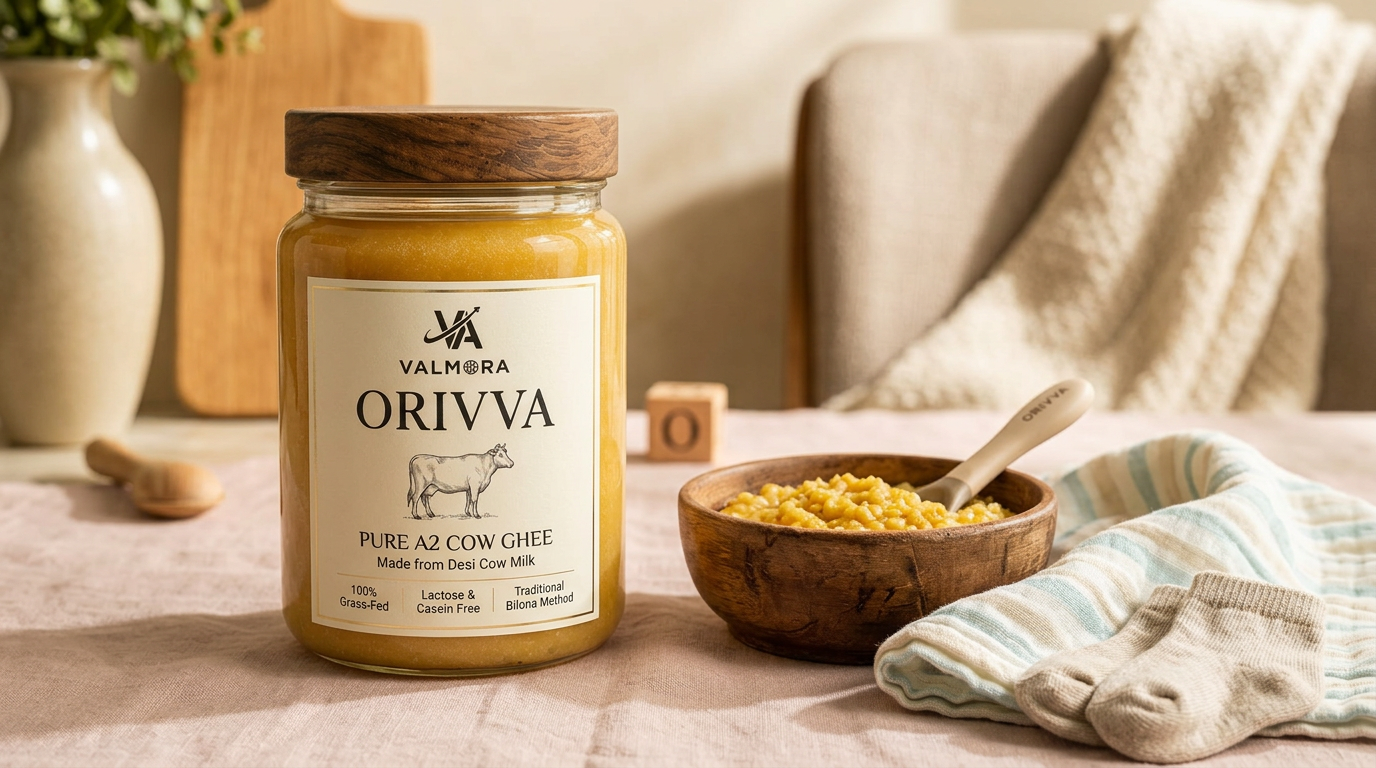
Ghee for Babies in Australia: When to Start and How Much
Indian and South Asian families have fed ghee to babies for generations. A small amount stirred into the first dal, a smear on the first roti, a teaspoon mixed with khichdi. The tradition is deep, and Australian parents from those backgrounds often wonder how it fits with modern paediatric advice. Parents from other backgrounds, curious about ghee's benefits, ask the same questions.
This guide pulls together both: what tradition says, what current Australian paediatric guidance suggests, and how to introduce ghee safely.
A note up front: this is general information, not medical advice. If your baby has known allergies, eczema, reflux, or any feeding concerns, talk to your child health nurse or GP before introducing ghee.
What current Australian guidance says
The Australasian Society of Clinical Immunology and Allergy (ASCIA) recommends introducing common allergenic foods, including dairy in small amounts, from around 6 months as part of complementary feeding. Whole cow's milk as a main drink isn't recommended until 12 months, but small amounts of dairy products in food are fine from 6 months.
Ghee falls in this complementary food category. Because it's nearly 100 percent fat with negligible lactose and casein, it's typically tolerated by babies who manage other dairy products well.
When to introduce ghee
Most Indian paediatricians and many Australian families introduce ghee in tiny amounts from around 6 months, once the baby has started solids and is tolerating basic foods like rice cereal, pureed vegetables, and dal.
The key is small amounts. Start with a few drops mixed into food, not a teaspoon at a time. Watch for any reaction over the next 48 hours.
Suggested progression:
• 6 to 8 months: a few drops in dal or vegetable puree, once a day• 8 to 12 months: up to half a teaspoon mixed in food• 12 to 18 months: up to 1 teaspoon a day• 18 to 24 months: 1 to 2 teaspoons a day across meals
These are rough guidelines. Every baby is different.
Why families have given ghee traditionally
In Indian and Ayurvedic tradition, ghee for babies is believed to:
• Support brain development (because it's a concentrated fat, and infant brains are 60 percent fat)• Lubricate the digestive tract• Help babies build energy stores• Provide fat-soluble vitamins (A, D, E, K)
Modern paediatric nutrition agrees on the importance of healthy fats in early childhood. The Australian Dietary Guidelines specifically note that infants and young children need a higher proportion of fat than older children or adults, and saturated fat restrictions don't apply in the same way under age 2.
Practical ways to include ghee in baby food
1. Khichdi. Soft rice and dal cooked with vegetables, finished with a half teaspoon of warm ghee. A classic first food for babies across India, and one of the gentlest meals you can give. 2. Roti and ghee. From about 8 to 10 months, a small piece of soft roti smeared with ghee makes a good finger food. 3. Ghee in vegetable puree. A few drops stirred into pumpkin, sweet potato, or carrot puree. 4. Mashed banana. A tiny amount of ghee with mashed banana for a fat-rich snack. 5. Rice porridge. Soft cooked rice with a touch of ghee, suitable as a gentle meal when the baby is unwell.
Among traditional first foods for babies Australian families turn to, khichdi with ghee remains the most common.
What to watch for
Like any new food, introduce ghee one at a time and watch for rash or hives, vomiting or unusual reflux, diarrhoea or constipation changes, wheezing or breathing changes, or any other unusual reaction. If anything significant happens, stop and contact your GP or child health nurse.
For families with a history of dairy allergy specifically, talk to your paediatrician before introducing ghee.
Quality matters for babies more than for adults
Babies have smaller bodies and developing systems. Quality is non-negotiable. Choose ghee that is pure cow's milk ghee (not buffalo for very young babies), from a reputable brand, made by the bilona method if possible, with no additives, no oils, no colours, stored in a glass jar, and from a fresh batch with a clear manufacturing date.
This is one of the situations where paying extra for premium ghee genuinely matters.
How long can babies eat ghee?
Ghee remains an excellent food right through toddlerhood and childhood. Many Indian families continue daily use into adulthood as part of normal cooking. The Australian Dietary Guidelines do recommend moderating saturated fat from age 2 onwards, but a teaspoon or two of ghee a day fits comfortably in a balanced diet.
FAQs
At what age can I start ghee for my baby? Most paediatricians and Indian families introduce small amounts from around 6 months, alongside other solids. Always consult your child health nurse if you have concerns.
How much ghee can a 1-year-old have? A teaspoon a day across meals is a reasonable amount for most healthy 12-month-olds.
Is ghee good for baby weight gain? Ghee is a healthy fat source that supports normal weight gain in babies and toddlers. If you're specifically concerned about weight, speak to your GP rather than self-managing.
Can ghee cause allergies in babies? True ghee allergy is rare since most of the milk protein is removed. Babies with known cow's milk protein allergy should still introduce ghee cautiously and under medical supervision.