How to Use Ghee in Cooking: 12 Easy Ideas for Aussie Kitchens
You bought a jar of ghee, probably because someone told you it was healthier than butter, or because a recipe called for it. Now it's sitting in the pantry and you're not quite sure what to do with it beyond the occasional curry.
Ghee is one of the most versatile fats in the kitchen, and it suits Australian cooking far more than people realise. Here are 12 practical ways to use it, plus the basics on smoke point, pairing, and storage.
First, the basics
Ghee is clarified butter with the water and milk solids removed. That changes three things: a higher smoke point (around 250°C vs butter's 150°C), a longer shelf life at room temperature, and a different flavour — nuttier, deeper, slightly caramelised.
These properties make ghee genuinely useful for everyday Aussie cooking, not just Indian dishes.
1. Ghee on toast
The simplest use, and the one most people miss. Spread ghee on hot sourdough or fresh roti. The heat melts it instantly, and the flavour is richer than butter without being heavy. Add a pinch of salt or a drizzle of honey if you want to push it further.
2. Frying eggs
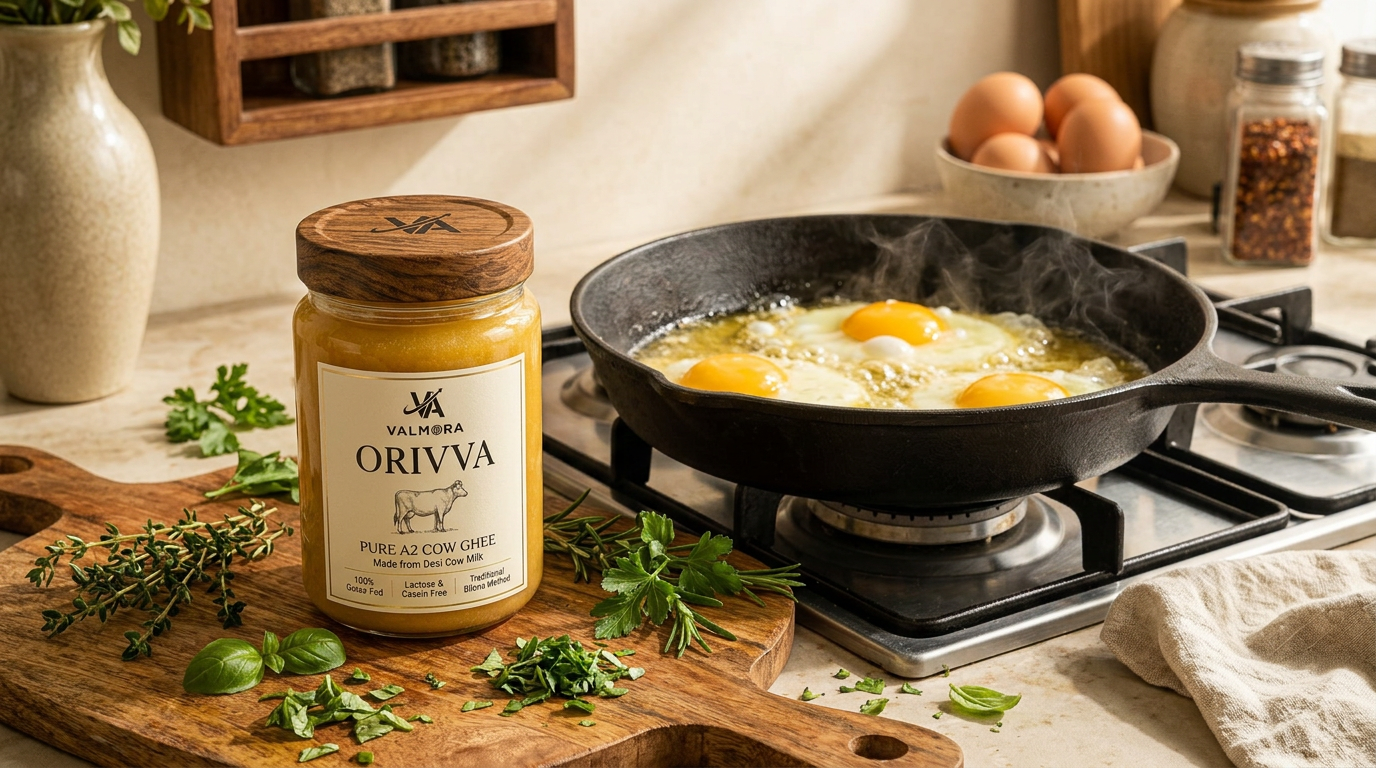
Crack an egg into a hot pan with a teaspoon of ghee. The high smoke point means you can crank the heat without burning the fat, which gives you crispy edges and a runny yolk every time.
3. Sautéing vegetables
Greens, mushrooms, capsicum, zucchini, eggplant: all of them benefit from sautéing in ghee rather than oil. The flavour carries through the vegetables in a way neutral oils can't match.
4. Finishing dal, soups, or stews
This is where ghee shines. Cook your dal, soup, or stew as normal, then add a teaspoon of warm ghee on top just before serving. In Indian cooking this is called "tadka" when combined with seeds and spices. Even on a basic minestrone or pumpkin soup, a small drizzle adds depth.
5. Roasting potatoes and root veg
Toss potato or pumpkin chunks in melted ghee with salt, pepper, and rosemary before roasting at 200°C. You'll get crispier edges and richer flavour than with olive oil. Works particularly well for Sunday roasts.
6. Cooking rice
Add a teaspoon of ghee to the water when cooking basmati or jasmine rice. The grains stay separate, the flavour deepens, and the kitchen smells excellent while it cooks.
7. Stir-frying
Despite the popularity of peanut and sesame oil for stir-fry, ghee handles wok temperatures beautifully. It also pairs surprisingly well with garlic, ginger, and chilli.
8. Baking
For shortcrust pastry, cookies, or banana bread, you can substitute melted ghee for melted butter at a 1:1 ratio. Some bakers reduce the quantity by 10 to 15 percent since ghee has no water content. The result is a richer, slightly more tender crumb.
9. Coffee or chai
A small spoon of ghee in hot coffee blends into a frothy, creamy drink. This is the basis of "bulletproof" style coffee. It also works beautifully in masala chai.
10. Popcorn
Melted ghee drizzled over freshly popped popcorn beats butter hands down. The nuttier flavour holds up better, and it stays liquid for longer so it coats more evenly.
11. Grilled cheese or jaffles
Spread ghee on the outside of the bread instead of butter. The crust browns faster, gets crispier, and doesn't burn the way butter sometimes does in a sandwich press.
12. Searing meat
For a steak, lamb cutlets, or chicken thighs, ghee handles the high heat better than butter. You can sear hard at the start, then add herbs and garlic to the pan at the end.
A note on substitution
When cooking with ghee instead of butter, the conversion is usually 1:1. The main difference is water content: butter is about 16 percent water, ghee has almost none. So in baking, you may want to reduce the quantity by 10 to 15 percent.
Heat: how high can you actually go?
• Olive oil (extra virgin): 190°C• Butter: 150°C• Vegetable oil: 220°C to 230°C• Ghee: 250°C
You can deep-fry in ghee, sear meat over high heat, or roast at maximum oven temperature without breaking down the fat.
Pairing notes
Ghee pairs naturally with warm spices (cumin, coriander, cardamom, cinnamon, mustard seeds), aromatics (garlic, ginger, curry leaves, fresh thyme, rosemary), vegetables (pumpkin, sweet potato, cauliflower, spinach, eggplant), proteins (lamb, chicken thigh, paneer, eggs, lentils), and sweet ingredients (honey, jaggery, dates, banana).
It's less ideal for delicate fish where butter or olive oil might be preferable, and for cold applications like salad dressings.
Storing ghee in Australian conditions
Ghee doesn't need refrigeration. Keep it in a clean jar with a tight lid, in a cool, dry cupboard, away from direct sunlight. In hot Australian summers, especially in Brisbane and Darwin, ghee will turn liquid. That's normal and doesn't affect quality.
Use a clean dry spoon every time, and a good jar will last 12 to 18 months easily.
FAQs
Is ghee healthier than butter for cooking? For high-heat cooking, yes. Ghee has a higher smoke point and produces fewer harmful compounds when heated to frying temperatures.
Can I use ghee in baking? Yes, at a 1:1 ratio for melted butter. Reduce quantity by 10 to 15 percent in recipes that depend on butter's water content.
Does ghee work in Western recipes? Absolutely. Anywhere you'd use butter or oil for cooking, ghee works.
How much ghee should I use per dish? A teaspoon to a tablespoon is usually plenty for sautéing or finishing.