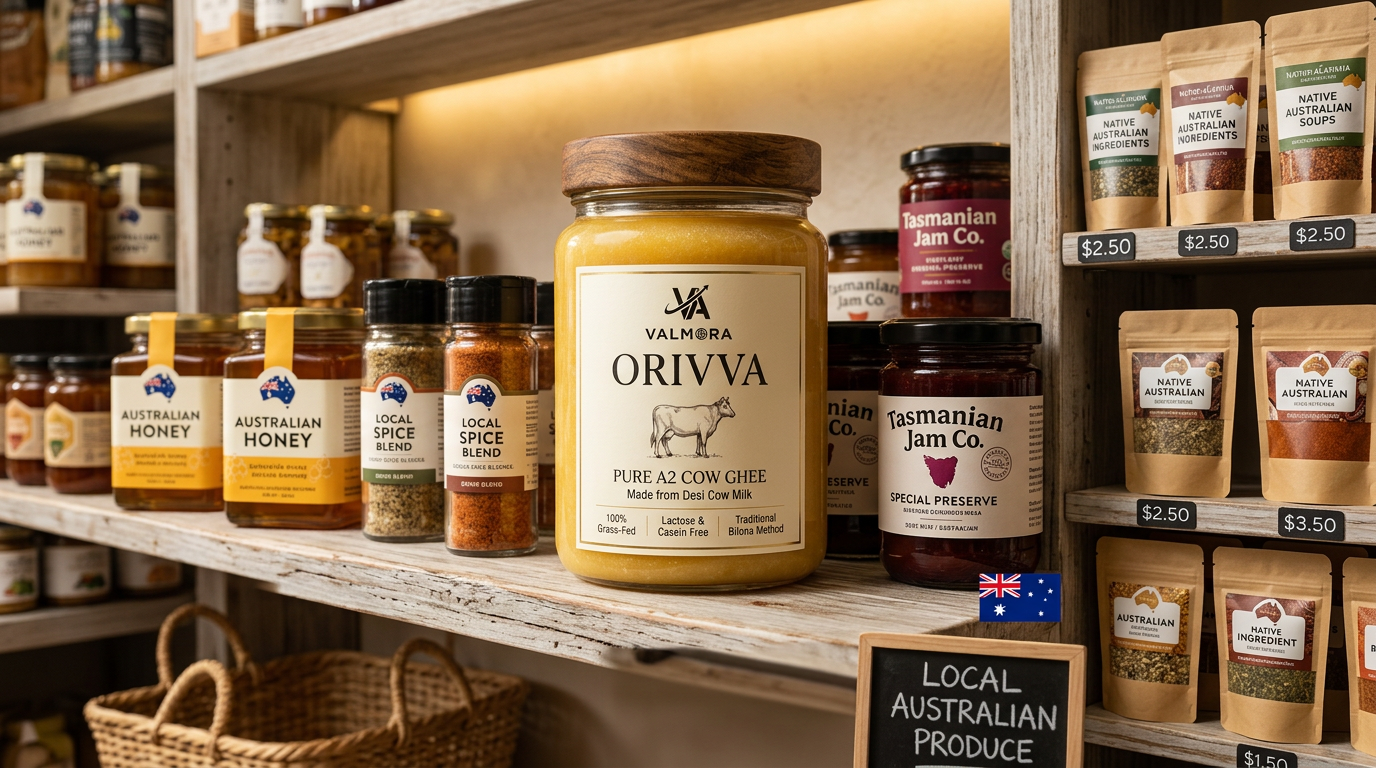
Where to Buy Pure Desi Ghee in Australia: 2026 Buyer's Guide
Ghee has gone from a niche South Asian ingredient to a regular fixture in Australian kitchens. You'll find it in Coles. You'll find it on Amazon. You'll find it stacked four jars deep in spice shops across Sydney, Melbourne and Brisbane. But finding pure desi ghee — the kind that actually tastes like ghee from your grandmother's kitchen — takes a bit more work.
This guide is for anyone who has bought a jar and felt let down. The flavour was off, the texture was too soft, or it just didn't melt the way real ghee should. Here's where to buy desi ghee in Australia, what to look for, and what to avoid.
What "pure desi ghee" actually means
In India, "desi ghee" means ghee made from cow's milk using the traditional method. That usually means milk is cultured into curd, the curd is churned to extract butter, the butter is simmered slowly until the water evaporates and the milk solids brown, and what remains is filtered into pure golden ghee.
Real desi ghee is grainy at room temperature in cooler months, melts to liquid gold in warmer weather, and has a distinct nutty, slightly caramel aroma.
Option 1: Indian grocery stores
Still the most reliable option in most Aussie cities.
- Sydney: Harris Park, Parramatta, Liverpool, Strathfield, Glenwood• Melbourne: Dandenong, Clayton, Tarneit, Wyndham Vale, Point Cook• Brisbane: Sunnybank, Calamvale, Eight Mile Plains• Perth: Canning Vale, Wilson, Cannington• Adelaide: Hindley Street, Marion area• Canberra: Belconnen, Gungahlin• Hobart and Darwin: smaller selection but most CBDs have an Indian grocer
What you'll find: Verka, Amul, Patanjali, Britannia, GRB, Aavin, Nestle Everyday, plus a growing range of A2 and bilona-method premium brands imported from India.
The catch: Quality varies wildly between brands. Always check the manufacturing date and seal.
Option 2: Online stores (Australia-based)
Buying online has become the easier option for most people, especially outside the major cities.
What to look for: clear labelling of source, manufacturing and best-before dates visible in the listing, glass packaging where possible, Australian shipping, and reviews from real Australian buyers.
Australian e-commerce platforms like Vel Spices, Ghee Depot, and several specialist food sites stock both Indian and Australian-made ghee. Amazon Australia and eBay also carry a range.
If you want premium quality and traceability, premium cow ghee Australia options direct from established Indian export houses are now reaching Australian buyers without the typical retail markup.
Option 3: Supermarkets
Coles and Woolworths both stock ghee now, usually one or two brands. Convenient if you're already there, but range and pricing are limited. For everyday cooking, supermarket ghee is fine. For finishing dal or anything where flavour matters, you'll likely want better.
Option 4: Direct from Australian ghee makers
A small but growing group of Australian dairies now produce ghee locally, often using grass-fed milk from Victoria or NSW. Brands like Golden Farm and Gopalji have made local production a selling point.
Most local brands use the creamery method rather than traditional bilona, so the flavour profile is closer to clarified butter than true Indian desi ghee. Some Australians prefer this cleaner taste; some don't.
Option 5: Direct from Indian brands shipping to Australia
This is where the market is changing fast. Several premium Indian ghee brands now ship directly to Australian buyers, cutting out the distributor and retailer markup. The product arrives fresher and often costs less than the same brand on an Indian grocer's shelf. Particularly good for A2 and bilona-method ghee.
What to avoid
1. Vegetable ghee or "vanaspati" — hydrogenated vegetable oil, not real ghee. 2. Suspiciously cheap "desi ghee" — pure ghee requires roughly 25 to 30 litres of milk for 1 kg. 3. Bright yellow colour with no seasonal variation — can signal added colouring. 4. No production or batch date. 5. Plastic bottles for premium ghee — fat absorbs from plastic.
Price guide for Australia (2026)
Approximate retail prices for 1 kg of cow ghee:
• Mass-market commercial brands: $25 to $35• Standard quality imported brands: $30 to $45• Premium imported (specialist brands): $40 to $60• A2 / bilona-method ghee: $55 to $90• Boutique Australian grass-fed ghee: $50 to $80
If you're paying premium prices, you should know the brand's source, method, and ideally the breed of cow.
How to decide what's right for you
Ask yourself two questions. How much ghee do you actually use? If you cook Indian food regularly, you'll go through 500 g a month easily. What are you using it for? Everyday cooking and frying parathas: standard quality is plenty. Finishing dal, drizzling on hot rotis, or eating with khichdi: invest in something premium.
FAQs
Can I buy desi ghee at Coles or Woolworths? Yes, both stock at least one or two brands. Range and quality is limited compared to Indian grocers.
What's the cheapest place to buy ghee in Australia? Indian grocery stores typically have the best price-to-quality ratio for standard brands.
Does imported ghee from India go off in transit? Properly packaged ghee has a shelf life of 12 months or more without refrigeration.
Is it cheaper to buy ghee online or in-store? For mass-market brands, in-store at an Indian grocer is usually cheapest. For premium and A2 ghee, direct-from-brand online is often better priced.